
The 10 Greatest Albums of the 1940s
Similar to how the Great Depression severely stunted the music industry in the 1930s, so too did World War II in the 1940s. Paranoia was running rampant. People were displaced. Every penny of the economy went toward the war effort. As a result, popular music interests shifted to smaller, scaled-back settings, with an emphasis on intimacy and individual artistic expression. Both abroad and back home, the Greatest Albums of the 1940s brought people together like never before.
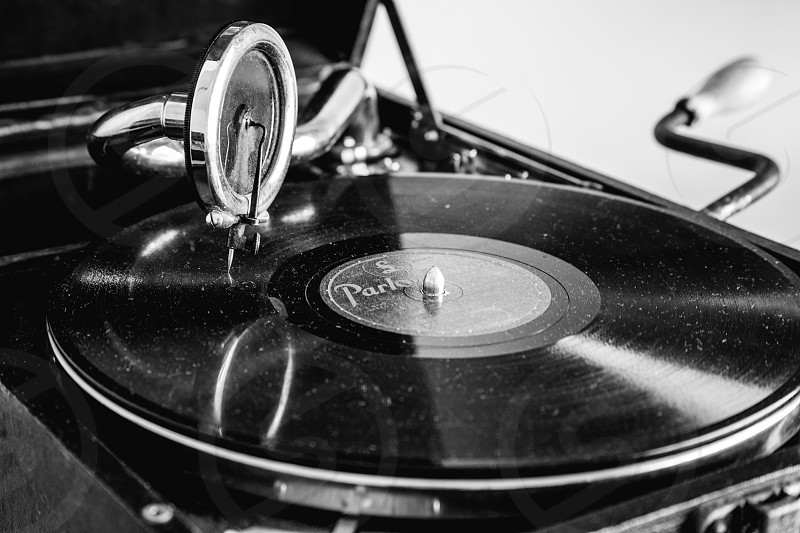
And because music was needed now more than ever, it became common for record companies to bundle 78 rpm singles together and release them as albums. Several artists took advantage of this new form, which is why — unlike previous decades — the Greatest Albums of the 1940s list is expanded to include 10 selections. Even though the Colin’s Review 50 Best Songs of the 1940s is a better overall representation of the decade’s diverse sounds, the albums here perfectly capture the zeitgeist of this dark and glorious era.
And so without further ado, here are my picks for the 10 Greatest Albums of the 1940s.
10. The King Cole Trio

Artist: Nat King Cole
Genre: Jazz
The King Cole Trio is a landmark release in easy listening history — 80 years later, and it still sounds just as smooth. Led by the gentle and comforting croon of Nat King Cole, it’s no surprise that this was the first chart-topping album in Billboard history. Never before had jazz music been so intimate, so mellifluous, such a perfect combination of catchiness and understatement. But Cole’s immaculate voice isn’t the only reason for The King Cole Trio’s success: each member of the group has serious instrumental chops, and their seamless musicality changed the trajectory of pop music moving forward. Continue reading…
9. The Voice of Frank Sinatra

Artist: Frank Sinatra
Genre: Traditional Pop
To this day, Frank Sinatra’s first studio album, The Voice of Frank Sinatra, remains the most tender and romantic collection that Ol’ Blue Eyes ever cut. The collection, originally released in 1946 as a set of four 78-rpm records, made an immediate impact: it was an immediate hit with the younger generation, a sophisticated album that could also make you swoon. Sinatra’s fervor and sincerity possessed a universal appeal, and his passionate yet laidback style of crooning forced listeners to hang on every note. Continue reading…
8. Music Out of the Moon

Artist: Les Baxter, Harry Revel & Dr. Samuel J. Hoffman
Genre: Exotica
Subtitled “Music Unusual featuring the Theremin,” Music Out of the Moon is eerie and uncanny and filled with sounds both familiar and foreign: easy listening lounge music that contains an unearthly, spectral glow. Songwriter Harry Revel, jazz bandleader Les Baxter and theremin player Dr. Samuel J. Hoffman came together to create an album that lays the foundations for psychedelia, retro-futurism and electronica, yet predates all three by a good margin. It’s no wonder that innovators from Sun Ra to Captain Beefheart to Neil Armstrong are all devout fans of Music Out of the Moon’s otherworldly ideas. Continue reading…
7. Black, Brown and Beige

Artist: Duke Ellington
Genre: Jazz
An extended suite that originally lasted 48 minutes in its debut Carnegie Hall performance, Black, Brown and Beige was the natural next step in Duke Ellington’s musical trajectory. Critical reaction to the piece was mixed, and a pared-down 18-minute edit was released by RCA Victor in 1946 to minimal fanfare. Nevertheless, the suite represents Ellington at his most ambitious, with bold big band arrangements standing side by side with violin ballads and vocal interludes. If nothing more, Black, Brown and Beige is a landmark in jazz music history, an essential piece of Ellingtonia that opened the door for brave artists to swing big. Continue reading…
6. “The Midnight Special” and Other Southern Prison Songs

Artist: Lead Belly
Genre: Blues
One of the most prolific and versatile artists of the 1940s — and the only one to carry over from the Greatest Albums of the 1930s — Lead Belly was adept at several genres and styles. But the style he knew best was the prison song (having spent much of his life in and out of various southern penitentiaries), and his Midnight Special collection is the rawest blues that Lead Belly ever put on record. With half the songs featuring the Golden Gate Quartet emulating a chain-gang choir, The Midnight Special is blues music stripped down to its bare essentials, taking direct influence from call-and-response hollers and traditional spirituals. This is Lead Belly’s finest overall album. Continue reading…
5. A Presentation of Progressive Jazz

Artist: Stan Kenton
Genre: Big Band
A Presentation of Progressive Jazz is exactly as the title describes: a collection of eclectic modernist songs crafted with the goal of transcending jazz itself. For the most part, Stan Kenton succeeds, effortlessly combining brash big band arrangements with avant-garde classical influences and exotic rhythmic flavors. This is swing music made for listening rather than dancing — an album that is experimental and breathtaking and intricate all at once. Continue reading…
4. U.S. Highball

Artist: Harry Partch
Genre: Experimental Folk
Self-trained avant-garde artist Harry Partch developed his own 43-tone scale and invented his own microtonal instruments. It’s not a shock that his singular style that is entirely unique in the entirety of music: it truly sounds like nothing else before or since, and Partch’s most famous compostion, U.S. Highball (a 26-minute stream-of-consciousness tone-poem that details the life of an American hobo) is among the most out-there recordings ever put to tape. Nevertheless, this is must-hear music; an innovative and exploratory classic that shares more in common with the music of Ancient Greece than with anything from the last two millennia. It must be heard to be believed. Continue reading…
3. Dust Bowl Ballads

Artist: Woody Guthrie
Genre: Folk
With Woody Guthrie’s seminal Dust Bowl Ballads, the modern singer/songwriter was born, and American folk music was forever changed, moving from centuries-old tradition to contemporary voice-of-a-generation. The pictures Guthrie painted with his music were extremely powerful: Dust Bowl Ballads remains one of the most stark and authentic accounts of American life ever recorded, as realistic as a Dorothea Lange photograph or a John Steinbeck novel.
Even though Dust Bowl Ballads is quite bleak (the album has become synonymous with the Great Depression), it’s still a very pleasurable listen. Guthrie was an entertainer first and foremost, and his descriptive and humorous and candid and eye-opening tunes were a successful call to arms and activism. Even 80 years after its release, Dust Bowl Ballads still perfectly embodies the blue-collar American spirit; one of the most important folk albums ever made. Continue reading…
2. Billie Holiday

Artist: Billie Holiday
Genre: Swing
This 1947 compilation originally released on Commodore Records captures jazz singer Billie Holiday at her absolute best — a brilliant compendium of Lady Day’s many moods, with eight timeless songs that get better and better the more you play them. Holiday’s emotive, mourning voice is heartfelt and profound and carries a classic, old-school sense of style, with lilting vocal melodies that are pure of tone and blend in perfectly with the backing accompaniment. Billie Holiday features some of the best vocal performances of the decade by one of the most unique singers in music history. She’s still the only singer with the power to make every song somehow sound like an instrumental. Continue reading…
1. Zodiac Suite

Artist: Mary Lou Williams
Genre: Jazz
The idea of marrying jazz music with classical was nothing new — just look to George Gershwin or Duke Ellington for proof — but the perfect synthesis of the two genres wasn’t discovered until 1945, the year that pianist Mary Lou Williams recorded the Zodiac Suite. Borrowing equally from bebop and Béla Bartók, Williams crafted a series of 12 mini-songs that were at once elegant, mysterious, rhythmic, modernist, complex and evocative. Taken as a whole, the Zodiac Suite is a beautiful blur of contrasting colors — jazz impressionism at its purest.
It’s easy to call Zodiac Suite a masterpiece; it’s harder to state the reasons why. Each song reveals something different to each listener, which makes it forever elusive. What’s clear, however, is that Zodiac possesses a perfect blend of abstraction, the kind that can only be found in similarly singular masterpieces — a proud lineage that includes Kind of Blue, The Black Saint and the Sinner Lady and A Love Supreme.
In other words, it stands among jazz music’s greatest works of art and is easily the greatest album of the 1940s. Continue reading…
Discover more from Colin's Review
Subscribe to get the latest posts sent to your email.