
“In Camelot” Review
Grade: B+
“Ask what you can do for your country.”
The Sopranos changed everything about television, basing an entire 86-episode drama around an antihero who was as charismatic as he was unforgivable. Likewise, season one of the series was built around Tony Soprano’s conflict with the ultimate anti-villain: his domineering mother. Livia Soprano’s nihilistic tendencies ultimately shaped her son into the sociopathic killer we see today, and even after her death in season three her shadowy specter still looms large over every scene.
But perhaps Tony’s father Johnny Boy — who died over 10 years before the series began — deserves more credit for how things turned out. Was he the revered icon we’ve heard so much about? The season five episode “In Camelot” suggests quite the opposite.
Throughout The Sopranos, Johnny Boy has been held in high regard and commended for withstanding his marriage to Livia. According to his wife: “He was a saint!” And a quote from Tony from back in the pilot: “My mother wore him down to a nub. He was a squeaking little gerbil when he died.”

Just like much of season five, “In Camelot” is a maudlin episode focused on death. For instance, Uncle Junior becomes addicted to attending funerals, as it’s the only way he can legally leave his house. Nevertheless, it’s hilarious to watch him examine the obituaries for potential opportunities, and it’s heartening to know that his dementia medications have improved his condition. However, his existential crisis at the end of the hour — in which he sobs uncontrollably and laments, “My life is only death!” — is somewhat alarming.
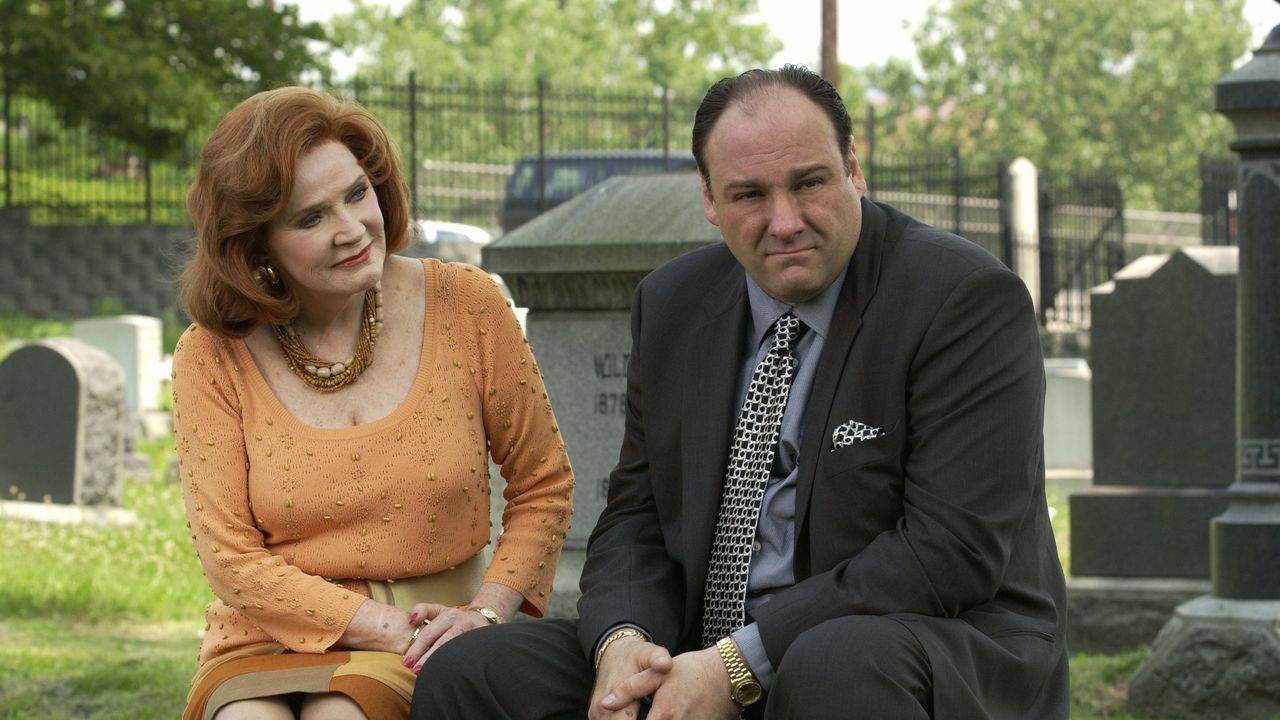
And it’s during one of these funerals that Tony meets Fran Felstein, his late father’s mistress. Once again, the nostalgic allure of the idealized past is inescapable. He visits Fran at her house and is comforted by stories of the old days. But the illusion is quickly shattered.
No amount of nostalgia can hide the fact that Fran is nothing more than a selfish money-grubber (cue Ralph Cifaretto’s pronunciation of “whore”), which in turn makes Johnny Boy an even worse parent than Livia in hindsight. Not only is it revealed that Johnny gave away Tony’s childhood dog to Fran’s son; he was also with Fran the night that Livia was hospitalized due to a miscarriage. In a revealing flashback, Johnny Boy forces a teenage Tony to lie to his mother to protect his father’s affairs.
In the present, Tony feels sorry for Livia and reconsiders his entire life. But, in one of the most interesting therapy sessions of season five, Tony remains stubborn rather than confessing his inner turmoil to Dr. Melfi. He continues to blame all his psychological shortcomings on his mother and, at the end of the episode, regales the rest of the crew with tales of Fran, Johnny Boy and John F. Kennedy.

Like its predecessor, “In Camelot” is another standalone installment that occasionally feels a tad inconsequential. For example, isn’t it strange and a bit out of character that Tony would be spending so much time with Fran? He helps her reclaim an inheritance “promised” to her by Johnny Boy, even ruling against Hesh Rabkin and Phil Leotardo in the process. It also doesn’t help that Fran — portrayed by a 74-year-old Polly Bergen (of Cape Feare fame) — is intentionally offputting.
However, director Steve Buscemi (his character, Tony Blundetto, basically gets the week off) captures everything with a haunting atmosphere, similar to what he brought to previous episodes like “Pine Barrens” and “Everybody Hurts.” Despite the touches of humor, the installment feels bleak and empty, and Fran’s cringeworthy rendition of “Happy Birthday, Mr. President” — which the camera gradually brings to an unpleasant close-up — is almost surreal in its grotesquerie.
The best scene is the final one. Tony, who has once again rejected a chance to change (i.e., show sympathy for his mother and admit his hatred for his father), chooses to entertain the fellas with exaggerated accounts of the old days. All the while, he drinks liquor and smokes his cigar, drowning out his lies with excess. The editing is quick and the scenery is hazy, which is amplified by the strippers dancing on their poles — another distraction and desensitization that calls to mind the ending scenes of “46 Long” and “University.”
All in all, “In Camelot” gives us plenty to think about despite being a minor installment. It’s a tough watch at times — Fran is purposely one of the most revolting characters in Sopranos history — but the episode provides tremendous insight into Tony’s past. We come away with a much better understanding of our main characters, even though we hate what we see.
STRAY ROUNDS
- “In Camelot” also features a somewhat forgettable subplot about Christopher Moltisanti, in which he meets a scriptwriter in Alcoholics Anonymous, preys on his weaknesses and gets him hooked on gambling. It’s another one of The Sopranos’ hilarious parables of self-righteousness leading to selfishness, but it feels out of place with the rest of the episode’s more serious subject matter. Furthermore, Chris’ Hollywood aspirations aren’t as interesting as they once were.
- JT Dolan, the drug-addicted screenwriter who owes money to Chris, tries to sell one of his Primetime Emmy awards. The pawn shop refuses to buy it, claiming that it’s nothing compared to an Oscar. A funny nod to series creator David Chase acknowledging the supposed shortcomings of his medium — and a tongue-in-cheek recognition of how The Sopranos is able to transcend TV itself.
- The therapy sessions with Dr. Melfi this episode feature interesting discussions about Tony’s psychological makeup, which is something we haven’t seen in a while. It’s a welcome change of pace, as it harkens back to the earlier seasons when Tony and Melfi actually made some semblance of progress. Typical of The Sopranos, however, Tony refuses to change and stubbornly blames all his shortcomings on Livia — even if he doesn’t necessarily believe she was the sole root cause.
- Speaking of early Sopranos seasons, we get to see a bit of Hesh Rabkin, who remarks that Tony barely ever sees him anymore. He’s right — I can’t remember the last time Hesh made a substantial appearance other than acting as Tony’s surrogate therapist.
- In an effort to retrieve Fran’s money, Tony chases Johnny Sacrimoni’s henchman Phil Leotardo through the streets, which causes Phil to crash his car. In later episodes, there will be ambiguities surrounding Phil’s potential closeted homosexuality, and his car crash is filmed in such a way that it seems he’s moaning Tony’s name as he agrees to pay him the money. He was gay, Phil Leotardo?
- Music selections this episode include “Rock the Casbah” by The Clash, “My Favorite Things” by John Coltrane, “Session” by Linkin Park, “Can’t Get You Out of My Head” by Kylie Minogue and “Melancholy Serenade” by Jackie Gleason.
- “In Camelot” was written by Terence Winter and directed by Steve Buscemi.
FAMOUS LAST WORDS
- “For years I suffered in silence.”
- “They’re gonna have Scottish bagpipes at the funeral. It should be interesting.”
- “You’re not normal. Neither of us are.”
- “There’s no chemical solution to a spiritual problem.”
Discover more from Colin's Review
Subscribe to get the latest posts sent to your email.