
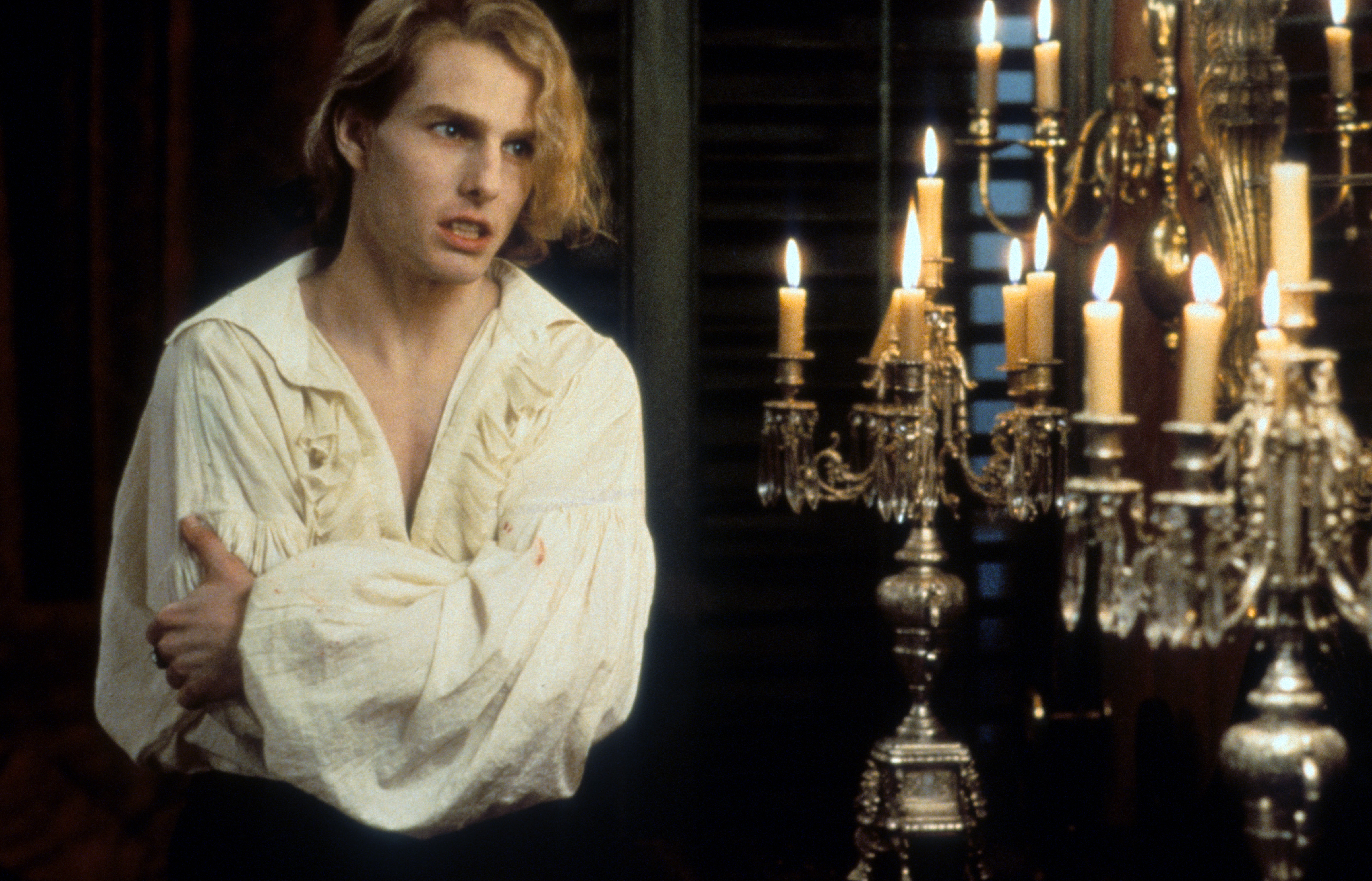
Interview With the Vampire
Grade: B-
Based on Anne Rice’s 1976 gothic horror novel of the same name (she also wrote the screenplay), Interview with the Vampire is most notable for being the only film to feature both Tom Cruise and Brad Pitt. If it wasn’t for their star-power, along with director Neil Jordan’s atmospheric visuals, Interview with the Vampire would be remembered — or forgotten, rather — for the over-the-top schlock flop that it unfortunately is.
Directing:
Jordan does a great job recreating the period settings: the lush bayous of colonial New Orleans and the surreal impressionism of 1870s Paris are impressively rendered. Likewise, the special effects are quite convincing, taking on a David Lynchian level of weirdness (e.g., the satanic avant-garde theater sacrifice scene). Jordan is certainly not to blame for the film’s failures — Interview with the Vampire nails the gothic scenery.
Acting:
Pitt and Cruise — especially Cruise — show why they deserve to be recognized as Tier One movie stars: only a pair of great actors could make a dumb, nonsensical, over-the-top story like Interview with the Vampire into a halfway-entertaining supernatural thriller. Sure, they’re both woefully miscast, but, hey, it’s worth watching just for the fact that this is the only film they ever did together. But the true standout performance might belong to 12-year-old Kirsten Dunst, who holds her own and sometimes outshines the Hollywood A-listers.
Writing:
Interview with the Vampire’s screenplay is pretty poor, which is very surprising considering that Rice herself wrote it. Inconsistent pacing, unintentionally funny dialogue and nonsensical character motivations all lead to a storyline that doesn’t have much of an overarching plot. This isn’t the first vampire drama without a sense of direction (Francis Ford Coppola’s Dracula adaptation was released two years prior), but it might be the first without a sense of danger.
Music:
Composer Elliot Goldenthal takes influence from Golden Age of Hollywood heavyweights like Dimitri Tiomkin and Maurice Jarre: the dramatic orchestral score shadows every emotion. But because the writing does such a bad job with emotional characterization, Goldenthal’s gothic bombast is unfortunately out of place.
Ending (SPOILERS):
The main themes of Interview — evil never dies; and nothing’s worse than not dying — are supposed to finish the film on a thought-provoking note, but because they were never properly developed during the rest of the movie, the conclusion is quite unfulfilling: the interviewer’s (Christian Slater) request to be turned into a vampire is remarkably obtuse, and Lestat’s surprise return in a modern-day setting is a shameless set-up for a sequel that never came. And my life was a lot better before I heard the Guns n’ Roses cover of “Sympathy for the Devil,” which was recorded specifically for the end credits.
“Evil is a point of view. God kills discriminately and so shall we. For no creatures under God are as we are, none so like him as ourselves.” — Lestat de Lioncourt
Why Interview With the Vampire gets a B-
The choppy storyline adds little originality to already-established vampire mythology. Regrettably, the film is only worth watching to see Tom Cruise and Brad Pitt (and Kirsten Dunst) share the screen together.
Discover more from Colin's Review
Subscribe to get the latest posts sent to your email.