
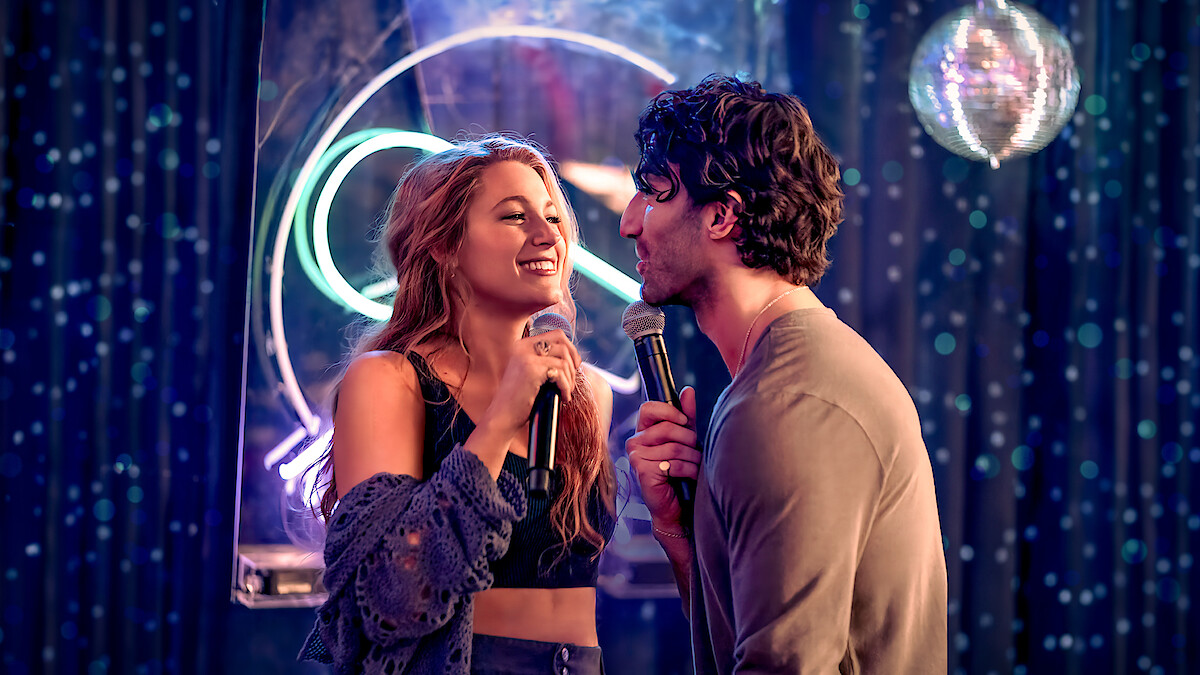
It Ends With Us
Grade: D-
It Ends With Us is a maddening relationship/domestic abuse drama that is, for no reason at all, one of the most confusing films I’ve ever seen. The narrative is easy enough to follow, sure, but the lack of proper editing, the excess of clunky dialogue and the actors hitting all the wrong emotional beats turn the film’s intended message of empowerment into a needlessly convoluted disaster that reinforces harmful stereotypes.
Directing:
At best, director Justin Baldoni’s visual aesthetic for It Ends With Us looks like a sleek, spotless, indie rom-com, with an excess of shaky closeups and lens flares; at worst, an expensive Starbucks ad — all of which would be acceptable if it weren’t for the complete lack of staging: nearly every scene, whether flashback or montage or time jump, begins seemingly at random, with no proper context given as to how we got there or where we’re going next.
For instance, Lily Blossom Bloom exits her father’s funeral (in Maine) in the opening scene, and the next sequence begins with her sitting on the ledge of an apartment complex rooftop. It isn’t until minutes later that we realize this new scene takes place in Boston an unspecified amount of time later. Baldoni continues making these mistakes throughout the whole movie, kickstarting a runaway train of unintentional disorientation that sends It Ends With Us completely off the rails.
Acting:
Because Baldoni’s directing is so bad, and because Christy Hall’s screenplay is so tawdry, and because Colleen Hoover’s source material is so shallow, I can’t tell if Baldoni’s and Blake Lively’s acting performances are truly terrible or just a result of the extenuating circumstances. Probably a little bit of both, but probably closer to plain old terrible.
Cringeworthy dialogue aside, Lively and Baldoni have very little chemistry. This makes the sweet moments offputting and the offputting moments comical. Every interaction feels forced, and every emotion seems mismatched, and every outfit seems inappropriate for the occasion. There’s not an ounce of sincerity in the whole goddamn movie.
Writing:
There are levels to how bad this screenplay truly is. First of all, there’s the on-the-nose symbolism, which is mainly the fault of Colleen Hoover, who authored the 2016 novel on which the film is based. Character names like Lily Blossom Bloom (whose dream is to own a flower shop), Rile Kincaid (who is easily ‘riled’ up) and Atlas Corrigan (who carries the weight of the world on his shoulders) are contenders for the “I’m 14 and This Is Deep” Hall of Fame. Meanwhile, the dialogue is so cringeworthy, or delivered so poorly, that the intended effect of kitschy millennial fantasy becomes extremely unpleasant — It Ends With Us has some of the ugliest meet-cutes I’ve ever seen.
The second level of bad writing: the nonsense narrative coincidences, which are probably Hoover’s fault, too, but could’ve been propped up better by director Baldoni or screenwriter Hall. For example, Lily opens her flower shop, which surely would’ve cost millions, but there’s no need to explain where she got the money or why there are never any customers; she does it simply because her name is Lily Blossom Bloom, and the flower shop is not important to the storyline anyway. Pick any subplot and you’ll find the same empty contrivances.
The third, and most egregious: why is the domestic abuse storyline played as a twist? Sure, it’s hard for victims of trauma to confront the reality of their toxic situation (one of Lily Blossom Bloom’s first lines: “I’m an unreliable narrator”), but for us viewers, the “grand reveal” has the opposite effect and turns Rile, the abuser, into a sympathetic character. Or maybe Baldoni is just so bad at staging that this wasn’t supposed to be a twist at all? Either way, the revelation doesn’t tip the scales; it makes us hate all the characters equally.
Music:
An endless dirge of downtempo indie pop and neverending whisper singing that is the nadir of 2020s musical slop, so acrid and inoffensive and unmemorable and milquetoast to even make songs by Taylor Swift and Lana Del Ray sound insipid and uninspired. And because Baldoni loves montage sequences, we’re subjected to countless same-sounding songs throughout the 130-minute movie, though good luck identifying any of them.
Ending (SPOILERS):
It Ends With Us is supposed to be empowering, but Hallmarking a domestic violence storyline is a stylistic choice that pleases no one and offends everyone. The film glosses over harsh truths and instead imparts several unintentionally harmful messages:
- Every abuser has an evil origin story that explains their psychology. (Apparently, Rile accidentally killed his younger brother when he was six-years-old.)
- Every victim should take back their abuser so they can divorce him at the most triumphant moment. (Try to plan it right after you give birth to his son.)
- Every abuser will see the error of his ways and voluntarily cut off contact with his wife and newborn child forever, vowing to go to therapy and get the help he needs. (It’s okay to remain friends with his sister, even though she knew about all his troubling relationship patterns.)
- Every victim can just go back to the homeless boy who took their virginity 20 years earlier, who was always the love of your life anyway. (It’s fine if he’s a bit of a stalker, because he owns a fancy restaurant.)
“I want to have sex with you.” — Ryle Kincaid
Why It Ends With Us gets a D-
Or, why doesn’t It Ends With Us get an F? Well, for the same reasons why I can’t give The Room or Madame Web an F: this film is fascinating. By every metric, It Ends With Us is absolutely terrible, but I’ve never — at least, not in a long time — had a viewing experience so confounding and befuddling and frustrating. The movie is so bad that it stays with you for days. I mean, I was compelled to write over 900 words about it!
Discover more from Colin's Review
Subscribe to get the latest posts sent to your email.