
Paths of Glory
Grade: A
François Truffaut said that no film can be anti-war because film itself is inherently entertaining by nature, but Stanley Kubrick’s Paths of Glory might be the exception: a staunchly pessimistic portrayal of mankind’s utter absurdity and ultimate hopelessness.
Directing:
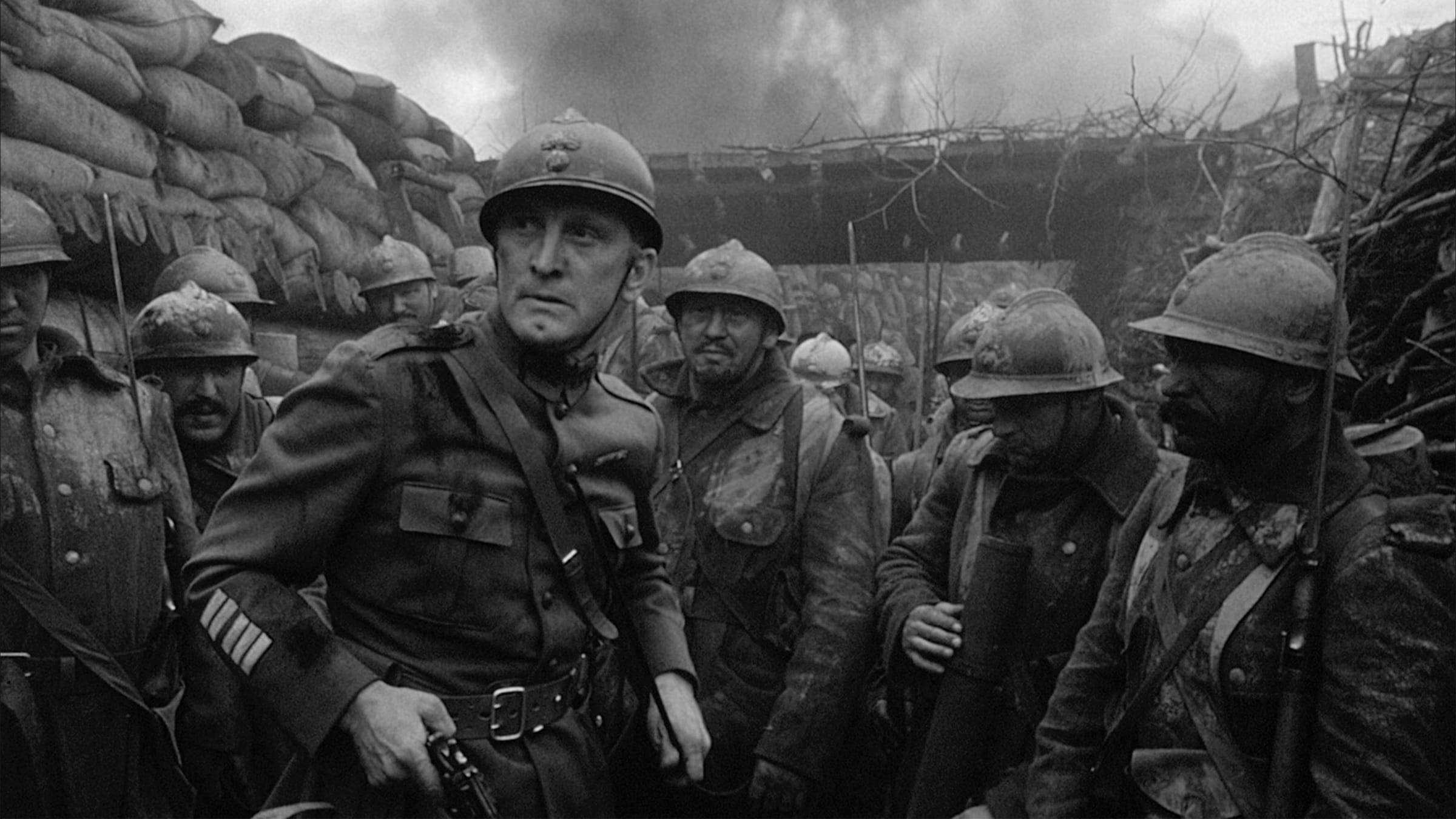
Unconventional because it only shows one battle, with an enemy who remains unseen, Paths of Glory is nevertheless the most impressive World War I film ever shot, largely thanks to Kubrick’s visual mastery, which provides documentary-style realism and an aura of pervading doom in every frame, from the close-up claustrophobic trenches where wars are fought to the wide-angled opulent palaces where wars are planned.
Acting:
Other than the fact that Paths of Glory has an American cast in a story about French army corruption, the actors all deliver grounded, realistic performances, with Kirk Douglas standing out as the moralistic Colonel Dax, who is very relatable in his portrayal of disgust and disdain for the human race, of which he himself is not excluded.
Writing:
Based on a 1935 novel inspired by the 1915 Souain corporals affair, Paths of Glory is not a casual watch: a war story with no victories, with action sequences that are throttling rather than thrilling, bleak as all hell, with subtle existentialism that sneaks up on you. But that is what makes the story so powerful and authentic — be prepared for pessimism when you press play (this applies to any Kubrick film, honestly).
Music:
The film’s relative silence is another reason for its staying power, without melodies to manipulate the emotions, an eerie quiet occasionally punctuated by militaristic marching drums, the sound of death amplified and exploding in a ballistic torrent during the film’s lone battle sequence. Withholding traditional music until the very end makes the conclusion all the more thought-provoking.
Ending (SPOILERS):
Kubrick’s ending to Paths of Glory is poignant and powerful, offering a brief reprieve after the grim execution scene, showing a group of rowdy soldiers moved to tears when a captive German girl is forced to sing a ballad for their entertainment, a reminder that beauty does exist in such a cruel world, but also an ironic condemnation of people forcing their own sentiment onto lyrics they don’t even understand (similar to the ending of The Sopranos’ season 3 finale, “The Army of One”), sung by a victim of war no less.
In classic Kubrick fashion, any sense of optimism is played sardonically, with some cosmic justice meted out for good measure: Colonel Dax receives orders that he and his men are to return to the front immediately. Life during wartime carries on uninterrupted, same as it ever was — an appropriately gloomy finale.
“Because you don’t know the answer to that question, I pity you.” — Colonel Dax
Why Paths of Glory gets an A
Classic anti-war film, ranking alongside Milestone’s All Quiet on the Western Front (1930), Pontecorvo’s The Battle of Algiers (1966) and Malick’s The Thin Red Line (1998).
Discover more from Colin's Review
Subscribe to get the latest posts sent to your email.