
The Top 5 Music Artists of the 1910s
What we know about popular music in the 1910s is mostly derived from myths, legends, exaggerations, second- and third-hand accounts, and a few surviving 78 rpm discs and phonograph cylinders. Nevertheless, we can still trace the origins of modern music to a handful of fabled performers who are largely responsible for all that came afterward. These Top 5 Music Artists of the 1910s may not have left a large recorded legacy (given the technology of the time period, how could they?), yet their imprint is inescapable.
And so, without further ado, here are the Colin’s Review Top 5 Music Artists of the 1910s:
[DISCLAIMER: this and all other “Top Music Artists” lists are strictly limited to pop music and therefore exclude classical composers.]
5. Original Dixieland Jass Band
Don’t let the name fool you — the Original Dixieland Jass Band weren’t the inventors of Dixieland, or jass itself for that matter. However, they can be credited with the first jazz recording: “Livery Stable Blues,” released on March 7, 1917, on the Victor label. Along with other standards such as “Tiger Rag” and “One-Step,” the all-white five-piece ensemble did a great deal to help popularize the fledgling genre outside of their native New Orleans.
4. W.C. Handy
Born in 1873, William Christopher Handy is today known as the “Father of the Blues” for pioneering, documenting, publishing and writing the earliest forms of what we now call blues music. He didn’t necessarily invent the genre, but his extensive travels throughout the rural regions of Mississippi and Missouri during his youth helped cultivate a distinctly American style. Handy then published “The Memphis Blues” in 1912, which was followed up by the extremely successful “Saint Louis Blues” in 1914 (a tune which Handy purportedly first encountered in 1892), thus introducing the “new” genre to the world at large. His contributions to popular music cannot be understated.
3. Jelly Roll Morton
Jazz — or jass, as it was called in the early days — was most likely originated by some combination of Buddy Bolden, Bunk Johnson, W.C. Handy, Scott Joplin and Jelly Roll Morton. That didn’t stop Morton from crediting himself as the genre’s sole creator; an unfounded claim which somewhat damaged his posthumous reputation. Nevertheless, there is no jazz without Jelly Roll, and his singular Spanish-tinged piano style successfully combined elements of blues, ragtime and marching band music into something new.
Morton’s recording career didn’t start until the 1920s, but he composed and published several of his most famous songs in the 1910s, including “Jelly Roll Blues” and “King Porter Stomp.” Regardless of what he asserted during his lifetime, Morton’s impressive body of work speaks for itself and corroborates even his most exaggerated hyperboles.
2. Irving Berlin
Irving Berlin couldn’t read sheet music or play the piano all that well, but dammit the man knew how to write a tune. In fact, you could say he single-handedly invented American popular music with his simple and direct style; a catchy and straightforward technique that appealed to the average working-class joe. From “Alexander’s Ragtime Band” in 1911 to his more sophisticated ballads featured in the Ziegfield Follies of 1919 revue, Berlin defined the American vernacular and stands among the greatest and most influential songwriters of all time.
1. Al Jolson
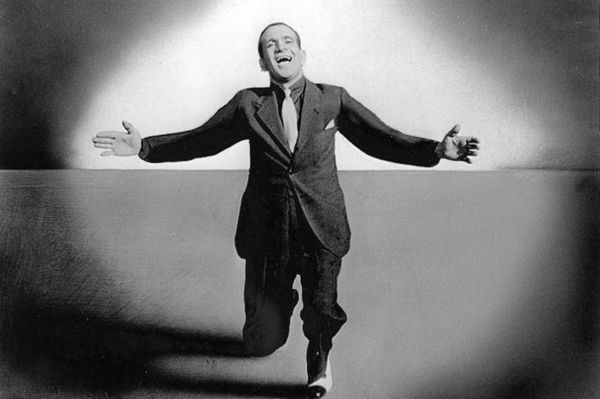
Imagine, if you will, a world before The Beatles, Elvis Presley, Frank Sinatra, Bing Crosby and Louis Armstrong — an unfathomably long time ago in terms of pop music. Believe it or not, this ancient era actually existed, and it was ruled by a Lithuanian-born, Jewish-American vaudeville star named Al Jolson. But “star” is selling him short: Jolson was and still remains one of the two or three greatest entertainers of the modern musical era.
His dynamic style of singing was electric; capable of galvanizing any audience into a dizzied frenzy. Of course, Jolson’s voice was so powerful because, well, that was a necessity back in the 1910s: in the pre-microphone era, singers needed to be strong enough to project to the back row of the theater. Nevertheless, Jolson could control his belting like no other, imbuing his songs with emotion, humor, perfectly timed melodic cadence and shameless over-the-top sentimentalism. Just listen to “My Mammy” and “Rock-a-Bye Your Baby With a Dixie Melody” to get a sense of his effortless showmanship and how he combined blues, Broadway, jazz and ragtime to form the foundations of popular music.
Even though Jolson’s technique soon went out of fashion, he enjoyed a long and successful career (he starred in several films and musicals, including The Jazz Singer, the first talkie) that extended long past his 1910s heyday. And even though his blackface performances are now viewed in poor taste (regardless of whether they were intended as metaphorical solidarity), Jolson’s influence on music history cannot be denied. He’s forever one of the greats.
Discover more from Colin's Review
Subscribe to get the latest posts sent to your email.