
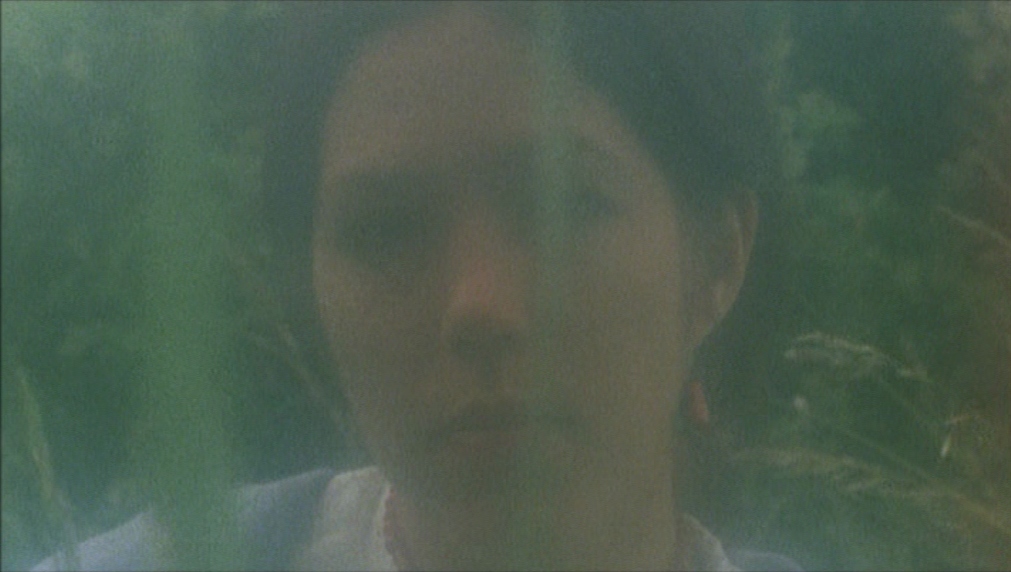
The Enigma of Kaspar Hauser
Grade: A+
German director Werner Herzog loves to examine the very limits of humanity, and The Enigma of Kaspar Hauser is an existential classic about a man who spent the first 17 years of his life without human contact. A few more notes on The Enigma of Kaspar Hauser:
Directing:
Despite being based on a real-life figure, The Enigma of Kaspar Hauser is a very surreal film — both in storyline and in scenery. Herzog lets shots linger and resonate, as if we’re discovering the mysteries of the world for the first time, just like the title character. Beautiful outdoor scenery is captured with a graceful nonchalance — the visuals are dreamy and mesmerizing and trance-inducing.
Acting:
Herzog casts Bruno S. — a street musician who had never acted before — as Kaspar Hauser. In both physicality and mental capacity, Bruno S. fully embodies the role: he looks and acts exactly like someone who has spent most of his life locked away in a cellar. As Kaspar grows accustomed to the strangeness of civilization, he doesn’t view the new experiences with wonderment but rather with a detached sense of bemusement, omnisciently observing everything around him. Bruno S. perfectly conveys this one-of-a-kind character, making this film the ultimate rarity: surreal and realistic.
Writing:
Based on the true story of Kaspar Hauser, who arrived in Nuremberg in 1828 without any explanation, The Enigma is a brilliant meditation on what it means to be human. As Kaspar learns how to walk and talk and read and write; as he learns about music and art and logic and religion; we begin to see the world through his eyes. What we find out is that he’s no closer to an animal than we are, and that our modern customs and beliefs are quite silly and meaningless and not the only way to look at the world. Despite the sometimes depressive tone, this is one of Herzog’s most optimistic and life-affirming films. It’s also brilliantly funny satire, too.
Music:
Canon in D Major by Johann Pachelbel and selected works by Wolfgang Amadeus Mozart bring Kaspar to tears when he hears them for the first time — “The music feels strong in my heart,” he weeps. Elsewhere, Popol Vuh founding member and longtime Herzog collaborator Florian Fricke plays a blind pianist who performs a pleasant new age composition for Kaspar. As always with Herzog, the music is inseparable from the world of the film.
Ending (SPOILERS):
Kaspar is stabbed by an unknown assailant (the same man who freed him from his cellar at the beginning of the film). On his deathbed, he relays a stunning vision (which we view on evocative lo-fi film stock) of a group of nomads lost in the Sahara Desert following their blind leader to the city. “This is where the story begins,” Kaspar says. Then he dies. Herzog always saves his most sublime moments for last, and the ending of The Enigma of Kaspar Hauser is one of the greatest scenes of his filmography. It’s a thought-provoking meditation on what comes after death — if anything at all.
“Smart apple! It jumped over his foot and ran away!” – Kaspar Hauser
Why The Enigma of Kaspar Hauser gets an A+:
I’m inclined to say that The Enigma of Kaspar Hauser is Werner Herzog’s greatest film…and possibly one of the greatest of all films. It is powerful enough to make us ponder the universe itself and our own place in it.
Accolades:
Colin’s Review Best Films of the 1970s
Discover more from Colin's Review
Subscribe to get the latest posts sent to your email.