
Shadow of the Vampire
Grade: B+
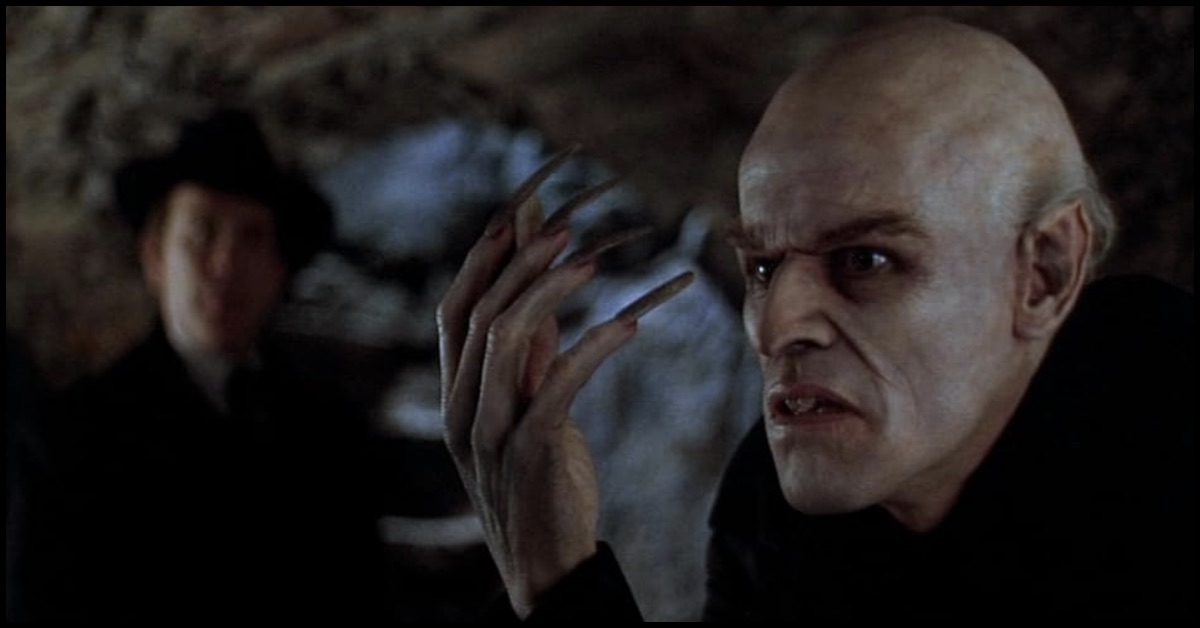
Shadow of the Vampire takes seriously an old urban legend: that Max Schreck, the mysterious German actor who played the original Nosferatu back in 1922, really was a vampire. There’s enough levity in the wacky premise to make the metanarrative work, but for the most part Shadow of the Vampire plays things pretty straight. This is a horror film before it’s a dark-comedy film (although it does succeed at both), with director E. Elias Merhige crafting a trancelike yet tranquil atmosphere. (He’s no stranger to horror — Merhige’s debut was the terrifying, lo-fi, satanic cult classic, Begotten.) More than anything, though, Shadow is a faithful homage to film history, reconstructing Nosferatu‘s iconic scenes with period-accurate detail and period-accurate filmmaking techniques (e.g., iris shots, intertitles; just like F.W. Murnau himself 78 years earlier). Therefore, to fully appreciate what the film accomplishes, a good understanding (and high opinion) of the source material is necessary. Knowing and liking silent cinema is required.
Transcending the niche subject matter is Willem Dafoe’s full commitment as Max Schreck. He’s completely indistinguishable from the original, delivering an uncanny, creepy and yet sympathetic performance, with some poignant insights into a vampire’s ultimate loneliness (he relays that the saddest part in Dracula is when the Count, upon arrival of Jonathan Harker, his first guest in centuries, struggles to remember simple human customs, like preparing a dinner or setting a table). John Malkovich, too, propels the film with an intense, idiosyncratic energy, turning F.W. Murnau into a comically obsessive auteur and leading him to a haunting, unforeseen conclusion. And let’s also give props to composer Dan Jones, whose beautiful orchestral score reminds me of Wojciech Kilar’s work in Coppola’s Dracula, adding authentic Gothic emotion. So, all in all, Shadow of the Vampire nails the look and feel of classical vampire films while also providing sly satire on method acting and artistic ambition. I do wish all these intriguing themes came in a slightly more interesting storyline, but hey what can you do? It’s a film made specifically for film buffs.
Discover more from Colin's Review
Subscribe to get the latest posts sent to your email.