
Sling Blade
Grade: A-
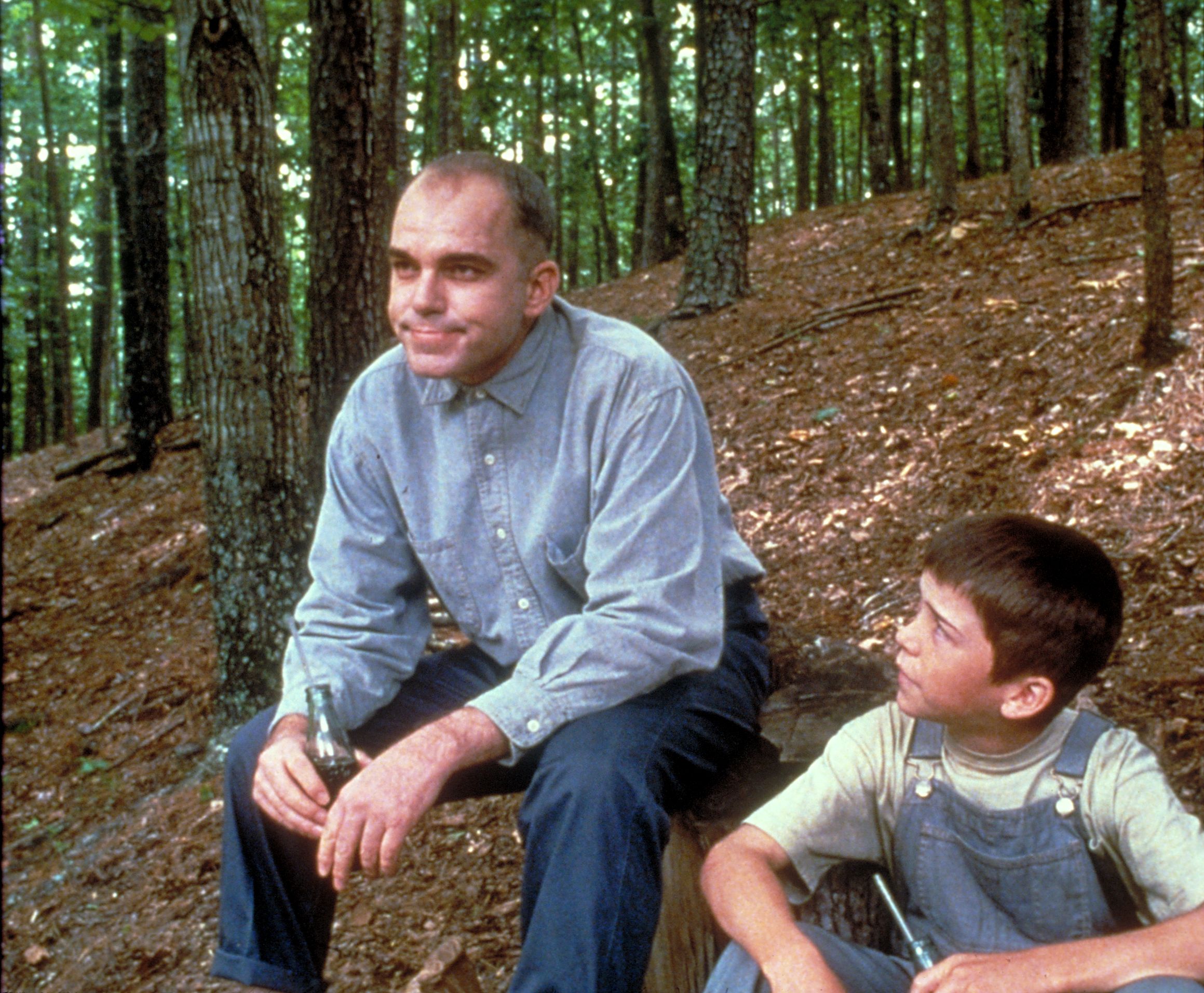
Karl Childers is one of the most singular, unforgettable characters in movie history. A murderer, a mental patient, a misunderstood man that we — and most of the characters who meet him — can’t help but love for his utter and honest humanity (and humility). Billy Bob Thornton, who also writes and directs the film, gives the performance of a lifetime in Sling Blade, a southern slice-of-life drama that is occasionally slow but is filled with masterful, contemplative storytelling.
Directing:
Thornton initially conceived Sling Blade as a one-man play, eventually expanding the work into a feature-length film running over two hours. The finished product stays true to its origins, built on long, unbroken monologues with stationary cameras and close-up vantage points. Thornton’s directing is simplistic yet effective, maybe a little boring at times due to the invariance of shots (quick aside: I highly advise seeking out the theatrical version rather than the Director’s Cut, as the latter is bogged down by unnecessary scenes that drag the runtime to nearly 150 minutes, which is far too long for such a small-scale story), but overall not too shabby for an actor-turned-director/first-time-filmmaker. There is a haunting beauty to the unassuming visuals.
Acting:
Sure, much of Sling Blade’s enjoyability will depend upon your tolerance for Thornton’s deadpan, raspy-voiced interpretation of mental illness, which lands somewhere between Dustin Hoffman’s Ray Babbitt and Leonardo DiCaprio’s Arnie Grape if we’re using the Tropic Thunder “Never Go Full Retard” scale. If, like me, you find the character fascinating, you’ll be thoroughly engrossed in Thornton’s immersive performance.
On the other hand, if you find Karl Childers to be grating or unintentionally comedic, there’s still much to appreciate in the rest of the cast: John Ritter, 14-year-old Lucas Black and country singer Dwight Yoakam all give terrific performances in supporting roles. Yoakam, in particular, is the character you love to hate: a redneck deadbeat so bigoted that you can’t wait for his head to be lopped off by the titular farm tool.
Writing:
There are two great scenes in Sling Blade: Karl’s opening monologue and his nighttime conversation by the creek with young Frank (Black). In both scenes, the dialogue reaches William Faulkner levels of elegance, while the surreal stories Karl recounts of his troubled upbringing echo Sam Shepard’s Buried Child.
The rest of the film follows a similar format of long, quiet conversations. None quite capture the magic of those two aforementioned scenes, and some run a little longer than they should, but everything builds up a lazy, Southern, dreamlike consistency that inevitably, predictably, ends with Karl saving his newfound friends and family in the only way he knows how. For such a pensive film, there is an omnipresent tension bubbling just beneath the surface.
All in all, Thornton crafts a terrific character study, with the character being far more interesting and unique than the study. Simple, universal truths: life is harsh for misfits, but love and beauty still exists. The lack of overt messaging makes Sling Blade more believable.
Music:
Famed ambient alt-country musician Daniel Lanois provides and performs the soundtrack, adding an atmospheric touch of mournful Americana not dissimilar to what Ry Cooder did for Wim Wenders’ Paris, Texas (1984). The music is mostly terrific and goes a long way in making Sling Blade seem more philosophical than it actually is. Twangy, reverb-heavy guitars turn shameless Oscar bait into profound artistic statement.
Ending (SPOILERS):
You’ll see the ending coming from a mile away: as soon as Karl befriends Frank, a lonely 12-year-old boy with an abusive stepfather, it’s clear what must be done. As a result, the ending is somewhat anticlimactic, especially since it seems to happen so fast and without struggle. Karl kills a drunken Doyle (Yoakam) with a kaiser blade, who accepts his death in an out-of-character fashion. I didn’t expect him to roll over so easily.
Meanwhile, Karl ends up back where he started: in the Arkansas state mental hospital. He, too, accepts his fate, resigned to peacefully stare out a window for the rest of his life, comforted by the fact that he saved young Frank and his mother from a traumatic fate (and, as is his nature, unaffected by the fact he left a dismembered corpse in their living room). Poetic justice.
“I like them French fried potaters.” — Karl Childers
Why Sling Blade gets an A-
Quiet, touching, inspirational, underrated drama about the human condition, on the same tier as Hallström’s What’s Eating Gilbert Grape? (1993) and McCarthy’s The Station Agent (2003).
Discover more from Colin's Review
Subscribe to get the latest posts sent to your email.