
Demon Pond
Grade: A-
Demon Pond alternates between beautiful and grotesque, mysterious and wacky, but never both at the same time; a unique movie experience anchored by a terrific onnagata performance.
Directing:
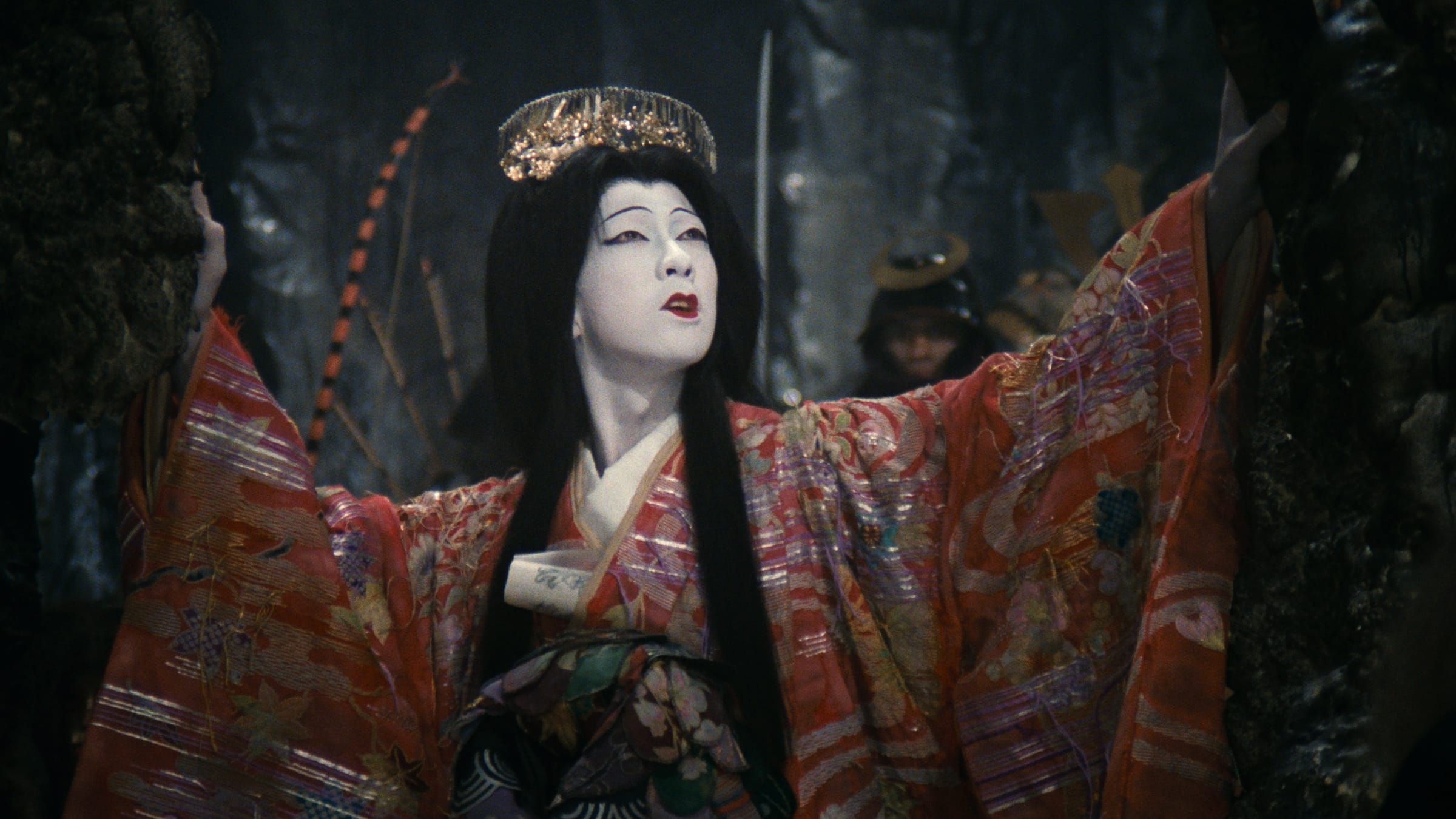
Japanese New Wave filmmaker Masahiro Shinoda is very resourceful in the way he combines aesthetics low and high. The scenes in the “real world” are ghostly and elegant, with beautiful colors and serene, entrancing atmosphere. On the other hand, the titular Demon Pond realm is a jarring juxtaposition of oneiric pagan costumes and cartoonish, exaggerated, shameless surrealism. Shinoda does a great job following his vision to the fullest through simple, practical effects.
Acting:
Famed onnagata (i.e., kabuki actor specializing in female roles) Bandō Tamasaburō, in his first film appearance, done up in mesmerizing makeup, plays Yuri the sorceress and Yuki the dragon princess. Not once do we acknowledge that she is really a he, and the film wisely doesn’t draw attention to this distinction. It’s purely an artistic choice, Tamasaburo completely immersed in the performance to give Demon Pond its unmistakable, mystical, uncanny aura.
Writing:
Based on a 1913 kabuki play, the modern-day folklore tells the story of a city traveler who comes to a drought-stricken town, over which a sacred bell must be rung every day lest the mythical Demon Pond — which is more of a demon lake, really — floods the village and kills everyone. There are themes of nature, spiritualism, human greed, etc., but plot isn’t really the point. It’s very much a vibes-based movie: if you enjoy the images, you’ll enjoy — or at least accept — the story.
Music:
The film’s best attribute, by far, is Isao Tomita’s ambient electronic score, notably his arrangement of Claude Debussy’s Prelude to the Afternoon of a Fawn for Moog synthesizers. I’ve never heard anything quite like it — not even Wendy Carlos (A Clockwork Orange; The Shining) or Carmine & Francis Ford Coppola (Apocalypse Now) come close, as far as psychedelic synth soundtracks go. Tomita’s beautiful, calming, otherworldly music makes the movie a must-watch.
Ending (SPOILERS):
The movie delivers what it promises: the epic deluge destruction of the sinful town. Wordless, cathartic, trancelike; easily Demon Pond’s finest scene. Shinoda creates a hypnotic biblical flood with only a superimposed waterfall and obvious miniatures, an extended sequence that gains visual majesty the longer it goes on, natural beauty from evident artifice. Nature wins in the end and the spirits are finally free. A fitting finale for a strangely alluring film.
“How could I take the side of monkeys without a tail?” — Camellia
Why Demon Pond gets an A-
A wild surreal trip with impressive visuals, like Jodorowsky’s Holy Mountain (1973) and Kurosawa’s Dreams (1990).
Discover more from Colin's Review
Subscribe to get the latest posts sent to your email.