
Ran
Grade: A
Akira Kurosawa’s Ran is an epic in every sense of the world: a violent, expansive, blood-soaked tragedy that transposes William Shakespeare’s King Lear to 16th century feudal Japan. It is unsparing, unflinching and uncompromising — a bleak yet striking vision of warfare and family betrayal.
Directing:
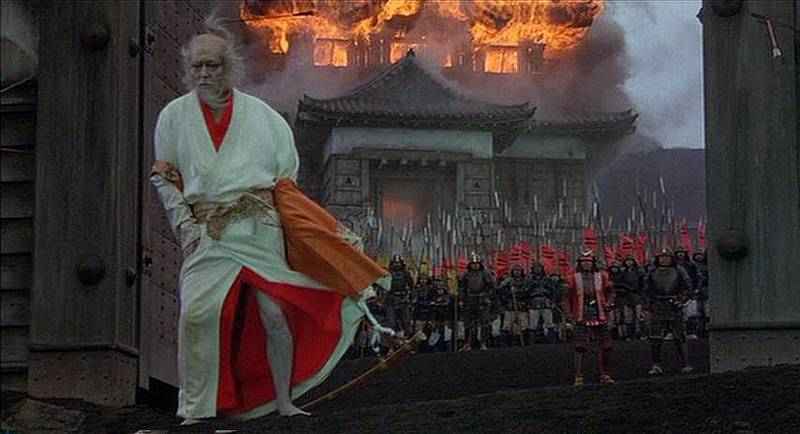
Filmed in dazzling color amidst the breathtaking natural scenery of Mount Aso, Ran is easily Kurosawa’s most beautiful film. The gorgeous visuals (e.g., windy grasslands, mountainous silhouettes, shapeshifting clouds) are countered with intense sequences of human destruction (e.g., burning castles, large-scale cavalry maneuvers, billowing smoke). Like Elem Klimov’s Come and See (another harrowing 1985 film about the unimaginable horrors of mankind), Ran becomes a surreal portrait of human savagery — an all-encompassing vision of physical and psychological brutality.
Still, Ran is a beautiful film to behold. Every frame is like a painting, ranging from the tranquility of Claude Monet’s Water Lilies to the trauma of Francisco de Goya’s Third of May 1808. The battle scenes are among the most impressive ever put to film, with the massacre at the Third Castle in particular being Ran’s most unforgettable moment. You want to look away, but the spectacle is so impressive that closing your eyes is impossible.
Acting:
The old, foolish Lord Hidetora is Kurosawa’s stand-in for King Lear (and for the director himself), and veteran actor Tatsuya Nakadai channels Jack Nicholson in The Shining to convey the character’s descent into total madness. Never once do we feel sympathy for the disgraced daimyō, but thanks to Nakadai’s expressive performance we’re always in tune with the character’s fractured state of mind.
Perhaps the most memorable performance, however, belongs to Mieko Harada as the truly psychotic Lady Kaede, who is even crazier than Hidetora and puts every Western femme fatale to shame. For example: she cuts the throat of the man who killed her husband, licks the wound and then makes love to him — sexy and scary at the same time. And somehow, it’s not over the top at all. It’s a great performance in a film full of them.
Writing:
Ran covers themes of loyalty, betrayal, the destructive nature of mankind — typical Kurosawa subject matter. Even though the story moves slowly, the power struggle between three brothers and their crazy old father is made all the more impactful by the film’s meditative pacing. In turn, the quiet, ruminative, philosophical musings make the battle scenes all the more explosive. From beginning to end, Ran is an enrapturing epic with an engrossing storyline and fantastic pacing.
Music:
Tōru Takemitsu’s brilliant orchestral score — which echoes the symphonic works of Gustav Mahler — is a huge reason why Ran is so epic. Takemitsu matches Kurosawa’s ambition at every turn: high-pitched strings à la The Shining to convey Hidetora’s psychotic breakdowns; mysterious Japanese flutes during the pensive, pastoral scenes; and a haunting adagio during the massacre at the Third Castle. It’s one of the most impressive soundtracks in Japanese cinematic history.
Ending (SPOILERS):
Ran features perhaps the most direct and depressing ending of any Akira Kurosawa film. All the main characters die, typical of a Shakespeare tragedy, and even faith in the Buddha isn’t enough to save mankind from its own self-inflicted destruction. As Kurosawa’s final classic, Ran serves as an indictment on the human race in general, that we are an insignificant species undeserving of such a beautiful planet. The final images of a lone survivor amidst the battle’s destruction — which echoes the finale of Apocalypse Now — is a poetic end to this incredible epic.
“Man is born crying. When he has cried enough, he dies.” — Kyoami
Why Ran gets an A:
As legendary director Akira Kurosawa’s final classic film, Ran is one of the great spectacles in cinematic history. The film features some of the best battle scenes ever, as well as some of the most gorgeous visuals to ever grace an action epic.
Discover more from Colin's Review
Subscribe to get the latest posts sent to your email.