
The Lady Vanishes
Grade: A
By far the best of Alfred Hitchcock’s British films, The Lady Vanishes combines taut mystery, trademark suspense, fun romance and witty comedy — a seamless blend of genres that makes for an extremely entertaining narrative. It’s a perfect place for cinephiles who wish to explore the director’s early filmography.
Directing:
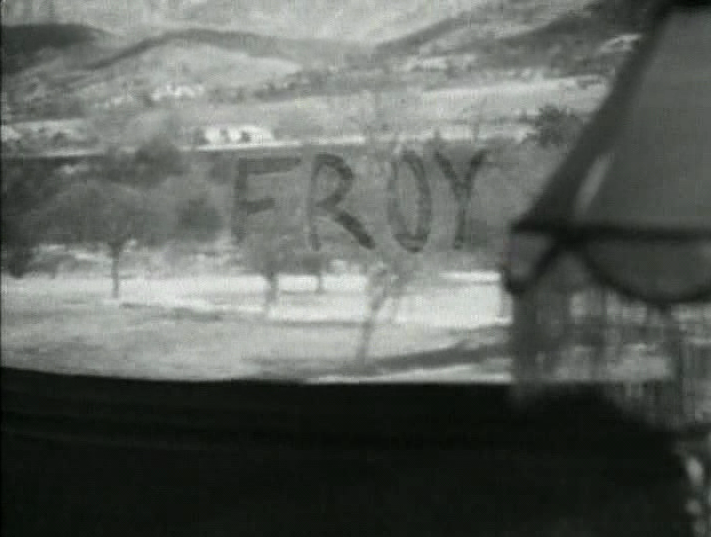
The Lady Vanishes is a simple film: a young woman named Iris befriends an elderly woman named Ms. Froy on a train. When Iris awakes from a nap after suffering a head injury, Miss Froy is gone, and everyone aboard the train denies ever having seen her. It’s a classic Hitchcock setup, and his voyeuristic camera puts us right in the thick of the action: poking into train compartments, peering down the aisles and amplifying the aura of confusion with disorienting special effects (the whirling “concussion” sequences are dazzling, especially for the 1930s).
Even though The Lady Vanishes lacks the big budget splendor of Hitchcock’s Hollywood era, it’s a masterclass in less-is-more filmmaking — every shot serves the story, and every visual is strategically staged for maximum emotional effect. Nothing is spelled out, which keeps the viewer rapt with attention.
Acting:
With its minimal settings and large cast of memorable supporting characters, The Lady Vanishes operates very much like a stage play. The lead actors — Margaret Lockwood and Michael Redgrave — have great chemistry. Likewise, the rest of the ensemble — notably Naunton Wayne and Basil Radford as a pair of hilarious, stereotypical, cricket-obsessed British gentlemen — are a fantastic collection of stock characters that excel at both comedy and suspense.
Writing:
The best Hitchcock films always have a healthy combination of suspense, romance and humor, but usually one element is leaned on more heavily than the rest. The Lady Vanishes, however, is the only movie to truly give equal shine to all three. It entertains on all levels: a thrilling mystery that bristles with romantic tension and finds catharsis in its quip-filled dialogue.
Adapted from a 1936 novel (The Wheel Spins by Ethel Lina White), the story lends itself perfectly to Hitchcock’s strengths. Clues are gradually revealed, conspiracies are slowly unraveled, and the main mystery of a missing old lady is devilish fun, even as we (like the main character) begin to doubt our own convictions. Meanwhile, the characterization is so rich that it’s easy to become fully enveloped in all aspects of the story. The witty banter and blushing flirtations keep things easygoing, even if the overall narrative is filled with suspense.
The Lady Vanishes weaves a tremendous web — maybe not the most psychological of Hitchcock’s films, but certainly one of his most vibrant. And it features a not-so-subtle pro-British anti-appeasement inclination, which adds to the film’s passion. For a director famous for torturing his characters, The Lady Vanishes is the rare Hitchcock classic where morals are black and white rather than dubious shades of grey. The emotional straightforwardness is comforting.
Music:
Like most films of the 1930s, The Lady Vanishes uses music sparingly. There are diegetic Eastern European folk songs accompanied by clarinet. Likewise, the film’s MacGuffin is a secret code in the form of a melody (the reason why the lady “vanishes,” after all). For the most part, however, the movie is content to let its clever dialogue serve as the soundtrack. Coupled with the sounds of a train passing through the countryside, our focus is entirely on the story.
Ending (SPOILERS):
As described above, the film’s abstract MacGuffin is entirely irrelevant: the enemy (i.e., Nazis) are hoping to intercept a secret code harbored by a rival spy (i.e., Ms. Froy). But we don’t necessarily care about all that; what matters is the mayhem that ensues. And when the mayhem is over, Hitchcock delivers a gleefully abrupt ending: Iris and Gilbert fall in love, forget the melody of the secret code they’re supposed to give to the embassy, and happily reunite with Miss Froy, who was playing the message at the embassy anyway. Everyone’s happy, we’ve had our thrills, and now the audience can go home.
So often, Hitchcock’s curt conclusions force us to reckon with our guilty conscience about enjoying such a murderous piece of entertainment. With The Lady Vanishes, the idea is the same, yet the tone is perfectly innocent: I’m glad everything all worked out, and I don’t care about all the unanswered questions related to the MacGuffin. Our British heroes are victorious, even if the villains aren’t defeated. A fun bit of escapism that doubles down as an ironic message to Neville Chamberlain.
“I’m about as popular as a dose of strychnine.” — Gilbert
Why The Lady Vanishes gets an A
A perfect blend of humor, romance and suspenseful mystery, The Lady Vanishes is an early Alfred Hitchcock classic that is endlessly rewatchable and still holds up nearly 90 years after its release. It is an irresistible and riveting film.
Discover more from Colin's Review
Subscribe to get the latest posts sent to your email.